
View all photos →
Day-by-Day Program
Your private driver meets you each morning. All stops are flexible — this is your trip.
Your driver picks you up in the morning. The route climbs south through the High Atlas over the Tizi n'Tichka pass at 2,260m — the highest paved road in North Africa — with panoramic mountain views. Descend into the pre-Saharan south and stop at Aït-Ben-Haddou, the UNESCO-listed mud-brick kasbah used as a set for Gladiator, Game of Thrones and dozens of other films. Continue to Ouarzazate — Morocco's "Hollywood" — for the night.
East along the Route des Kasbahs through the dramatic Dades Gorge red rock formations, then through Tinghir to the Todra Gorge — 300-metre limestone walls that dwarf the river below. Continue east through the palmeries of the Tafilalet oasis until the first dunes of Erg Chebbi appear on the horizon at sunset.
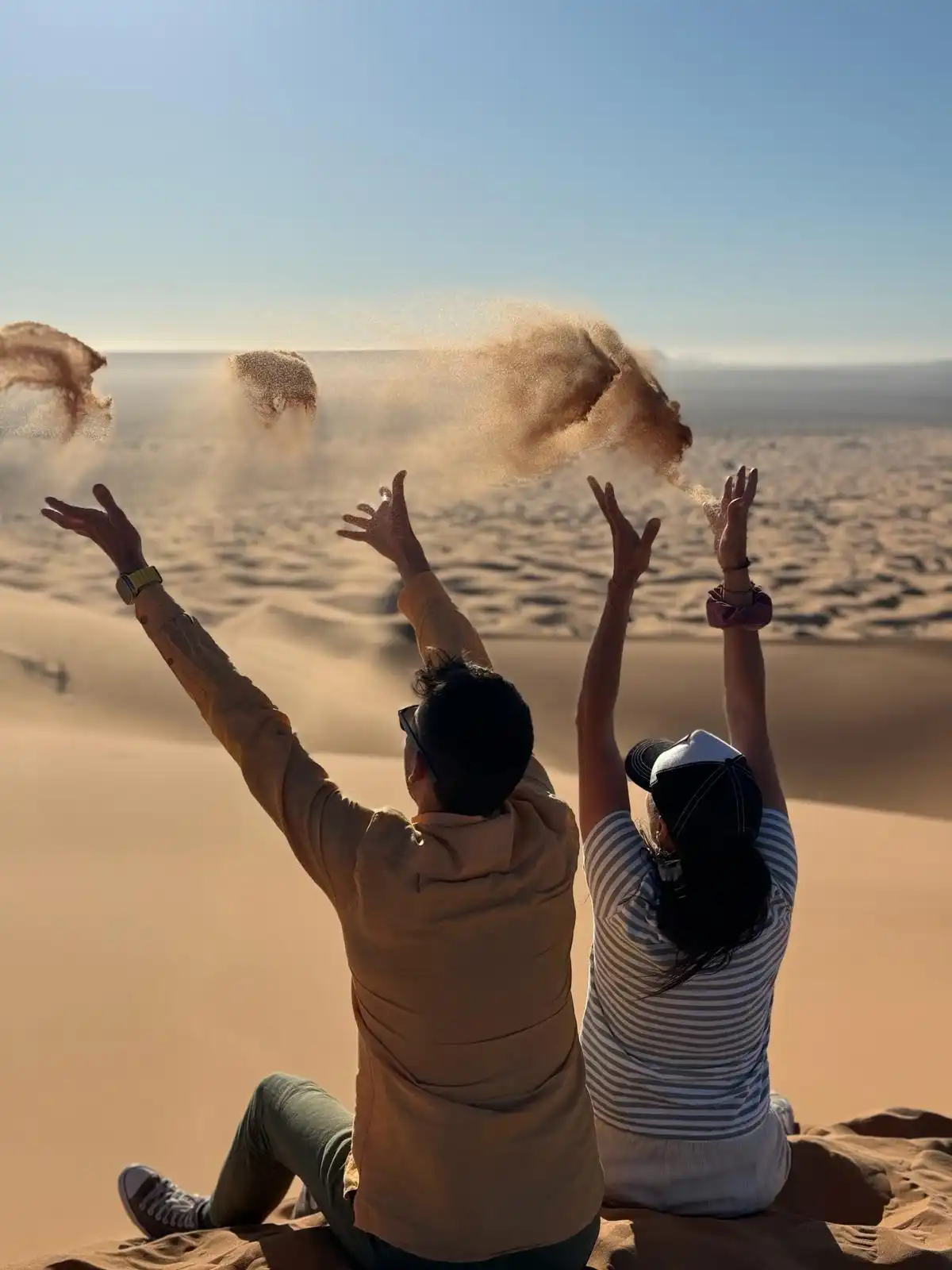
A day for the desert. Wake before sunrise to climb the Erg Chebbi dunes — up to 150 metres high — for one of the great sunrises anywhere in Africa. Rest at camp, then late afternoon: mount a camel and trek into the dunes as the light turns gold. Spend the night in a desert camp with fire, traditional music and more stars than you've ever seen. The desert camp is included in the Transport + Hotels option.
North through the Ziz Gorges and the long date-palm corridor of the Ziz palmery, then over the Middle Atlas via Midelt (highland apple country) and the Azrou cedar forest where Barbary macaque monkeys roam. Cross the improbable Alpine town of Ifrane before descending into the ancient walled city of Fès.
A full day in Fès el-Bali, the largest car-free urban area in the world. Explore 9,000+ lanes with a local guide. Visit the Chouara tanneries — the leather dyeing pits unchanged since the 11th century, best seen from the terraces above. See the Bou Inania Madrasa (14th century Quranic school) and Al-Quaraouiyine, founded in 859 AD — the world's oldest continuously operating university.
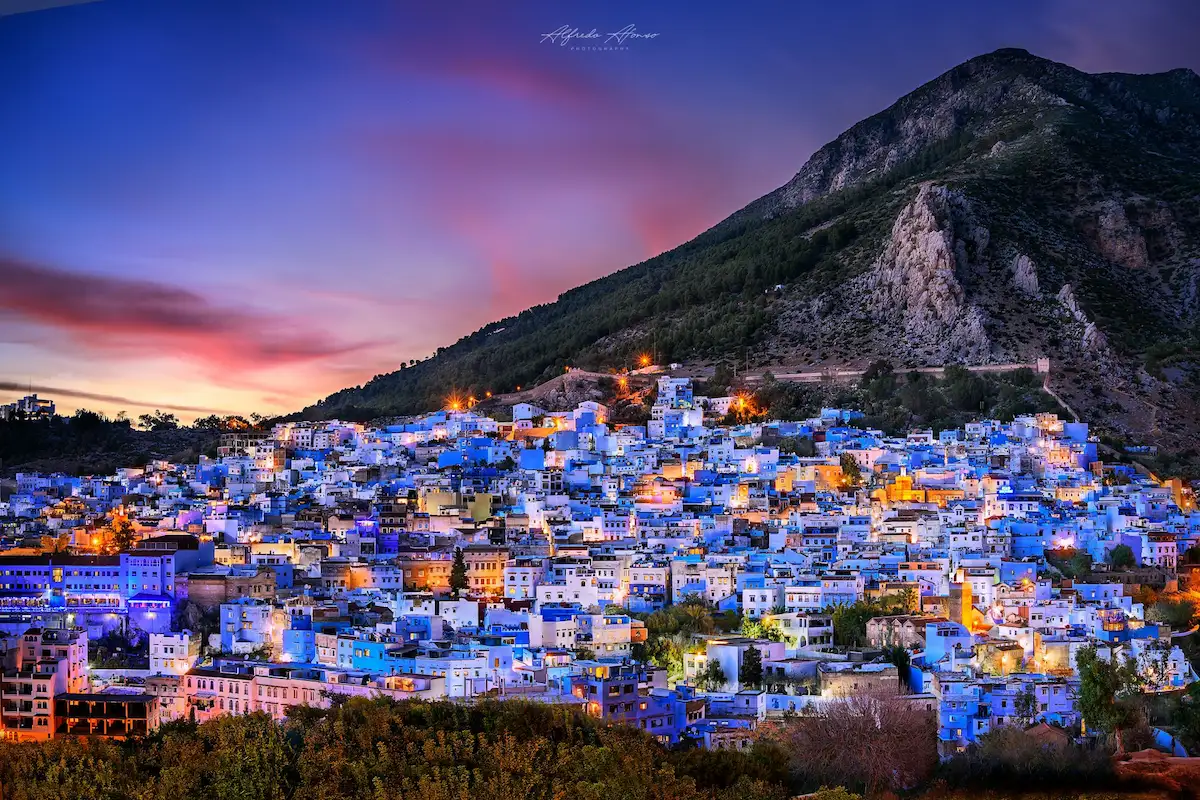
Drive west through the Rif Mountains to Chefchaouen, Morocco's most photogenic city — a hillside medina painted entirely in shades of blue and white. Founded in 1471 as a refuge for Moorish exiles from Spain. The light is extraordinary, especially at golden hour. Explore the Plaza Uta el-Hammam, the cascading blue lanes of the Ras Elma quarter, and the kasbah museum. No motorbikes, no hard sales pressure — one of Morocco's most relaxed cities.
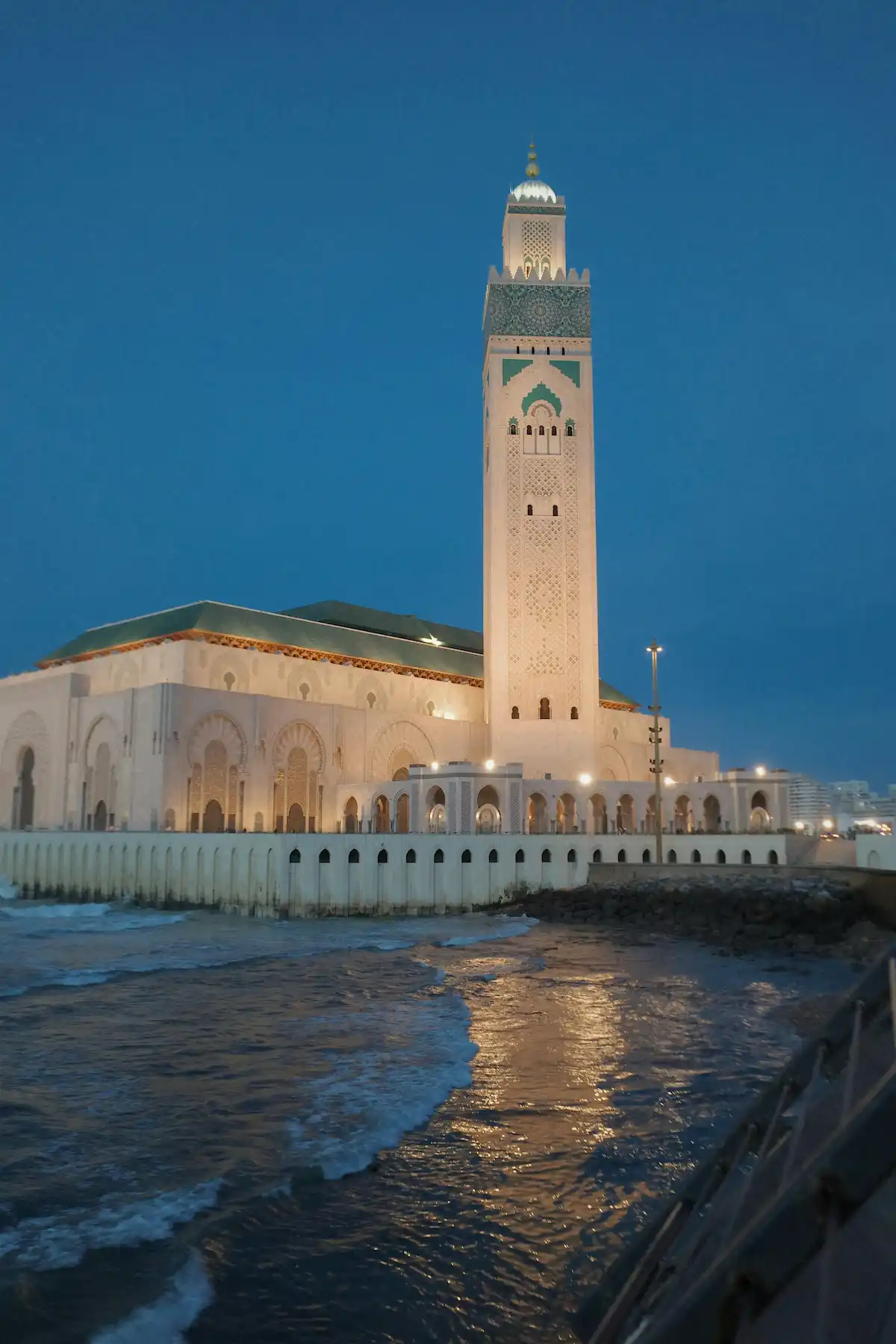
The final drive (~350 km) southwest to Casablanca. Arrive in time for an afternoon visit to the Hassan II Mosque — the 7th largest mosque in the world, built over the Atlantic Ocean. One of the few mosques in Morocco open to non-Muslim visitors. End with a walk along the Corniche and dinner in the Habous quarter. End the circuit in Casablanca or arrange an onward transfer back to Marrakech or the airport.
Route & Transfer Details
Every leg is with your private driver. No shared transport, no stops you didn't choose.
What's Included
Transport covers driver and vehicle for all 7 days. Add hotels for a fully packaged circuit.
✓ Always Included
- 🚗Private vehicle (sedan, van or minibus)
- 👨✈️English-speaking private driver
- ⛽All fuel and road tolls
- 📍All stops on the program
- 🕐Flexible daily departure times
- 📞WhatsApp support throughout
+ With Hotels Option
- 🏨6 nights — riads, desert camp & city hotels
- 🐪Camel trek at Erg Chebbi dunes
- 🌙Overnight desert camp (Merzouga)
- 🗺️Fès medina local guide (half-day)
- 🍳Breakfast at each stop
Frequently Asked Questions
7 days is comfortable — not rushed. The only day with significant driving is Day 4 (Merzouga to Fès, ~6h), which we schedule with multiple stops. Every other day has driving of 2–4 hours maximum, leaving the rest for sightseeing. Those wanting more depth in Fès or Chefchaouen can extend to 8 or 9 days easily.
Yes — we run it both ways. Reverse: Casablanca → Chefchaouen → Fès → Merzouga → Ouarzazate → Marrakech. Same roads, same price. Useful if you fly into Casablanca and out of Marrakech (or vice versa) — tell us at booking and we build the itinerary accordingly.
October to April is best. Spring (March–April) and autumn (Oct–Nov) offer ideal temperatures everywhere — mild in the desert (15–25°C) and cool in Chefchaouen. July–August is very hot in Merzouga (40°C+) — doable but uncomfortable. The Atlas pass can have snow in January but remains passable.
Absolutely. An extra night in Fès is the most popular extension (the medina rewards a full second day). An extra night in Chefchaouen for better light photography is another favourite. Just mention when booking and we adjust the itinerary and price.